New WHO/UNICEF data shows vaccination coverage slowly inching back to pre-pandemic levels.
Global vaccination coverage is headed in the right direction overall, but still far off from 2030 targets, with concerns over inequities in vaccine distribution and drop-outs.
Overall slow improvement
The newly released World Health Organization (WHO) and UNICEF estimates of national immunization coverage for 2025 show slow improvements since 2024, with 62% of countries making improvements or maintaining high coverage.
A main indicator of the overall upward trend in coverage is the total number of zero-dose children, or children who have never received a single dose of any routine childhood vaccine. The number of zero-dose children dropped by 745,000 from 2024 to 2025. The below graph shows a slight increase both in full coverage of diphtheria-tetanus-pertussis (DTP3) vaccine and in coverage from at least one dose (DTP1), with 69% of under vaccinated children falling into the zero-dose category.

Even with more children vaccinated now than in 2024, we have not returned to pre-pandemic levels and are far from achieving the IA2030 target, which aims to reduce the number of zero-dose children to 6.4 million by 2030. WHO and UNICEF estimate that number to be 13.5 million for 2025, more than double the target. Results also varied significantly by country. India, Brazil, and Ethiopia have made significant progress, but challenges remain in countries with less stable health systems.
For example, Yemen and Sudan are falling behind and reflect an overall concentration of zero-dose children in fragile, conflict-affected, and vulnerable settings. Furthermore, Nigeria had the largest number of zero-dose children in 2025, demonstrating the difficulty of maintaining coverage in countries with large birth cohorts and uneven health infrastructure.
Measles vaccination rates also remain far below pre-pandemic levels. The past year has shown continued improvements in the number of children with a full two-dose coverage (MCV2), but some backsliding in the number of children covered by the first dose. Inequities in the distribution of MCV contribute to this gap, which comes at a time when measles outbreaks are rising globally. Measles is the most contagious vaccine-preventable disease and frequently leads to hospitalization. 97 countries experienced large or disruptive measles outbreaks in the last 5 years, with 48 outbreaks in the U.S. alone in 2025, compared to 16 in 2024. This indicates an urgent need for higher MCV coverage.

Concerns over drop-out rates and vaccine equity
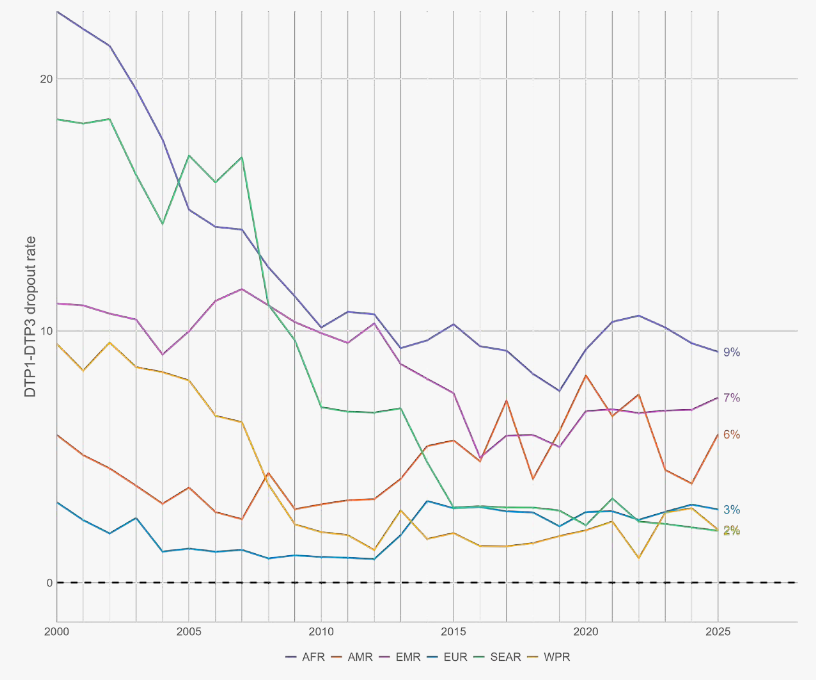
While one dose is better than none, the new data raises concerns over kids dropping out of programs after receiving their first dose, shown below. This is likely due to conflict, instability, and migration in certain countries that makes it difficult to reach children after their first dose. Improvements are needed in immunization services and defaulter tracing in order to decrease drop-out rates.
Backsliding and increasing inequity in MCV1 coverage presents more concerns. More countries in the European region and the Americas moved from very high coverage to modest or very low coverage from 2024 to 2025. Challenges like armed conflict, lack of access to information, or economic instability, are a reminder that communities face different barriers and require tailored solutions. Without equitable strategies to bridge these gaps, we push ourselves further away from 2030 coverage targets.
The good news
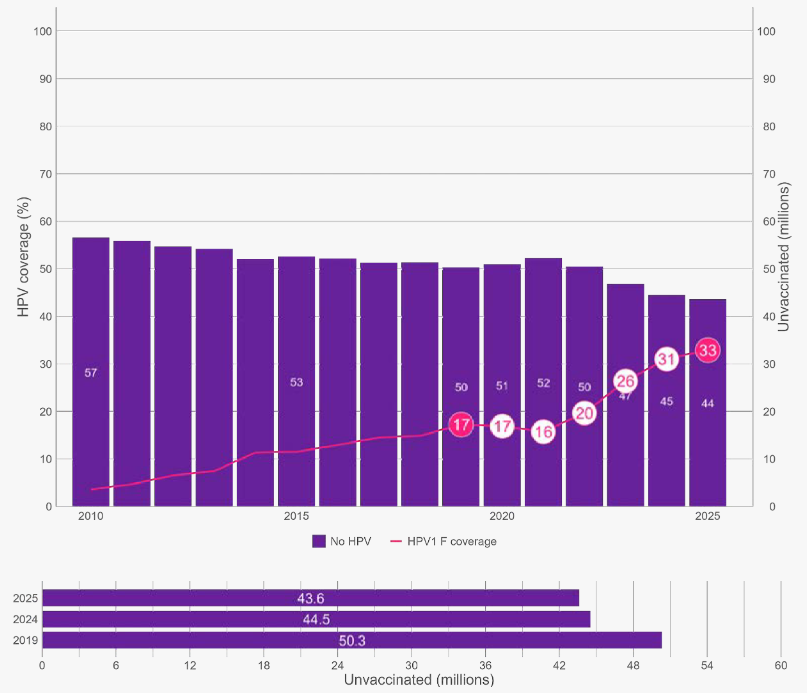
The percentage of girls vaccinated against human papillomavirus (HPV) continues to increase, with 33% of the world’s 66.1 million eligible girls covered by at least one dose in 2025. More countries that represent much of the global burden of cervical cancer caused by HPV, including China, have recently introduced the HPV vaccine, which increased global access to 65% in 2025. This is a significant improvement and is expected to greatly increase overall HPV vaccine coverage this year. However, even more vaccinations are needed to reach optimal coverage.
Additionally, low-income countries who were hit the hardest by the pandemic have been making a clear recovery, in part due to the “Big Catch-Up,” an initiative launched by WHO, UNICEF, and Gavi to reach children who missed important routine vaccines during the pandemic. This initiative provided over 100 million doses across 36 countries and is on track to catch up 21 million children on missed routine vaccines.
Moving forward
Routine immunization is the most reliable way to prevent dangerous and costly outbreaks, emphasizing the need for continued support for Gavi, UNICEF, and global immunization programs. The U.S. plays a critical role in the success of these efforts. With continued health investments from the U.S. government and millions of Americans working on life-saving medical technologies and vaccine production, we have the opportunity to keep our country safe while helping save millions of lives abroad.
Fortunately, U.S. global health partnerships and investments also contribute significantly to U.S. job growth and fuel innovation in every state, so everyone wins. With the significant benefits that U.S. global health investments have on the health, safety, and economic opportunities of Americans, the choice to continue support for global immunization is clear.