
Why Share Your Story?
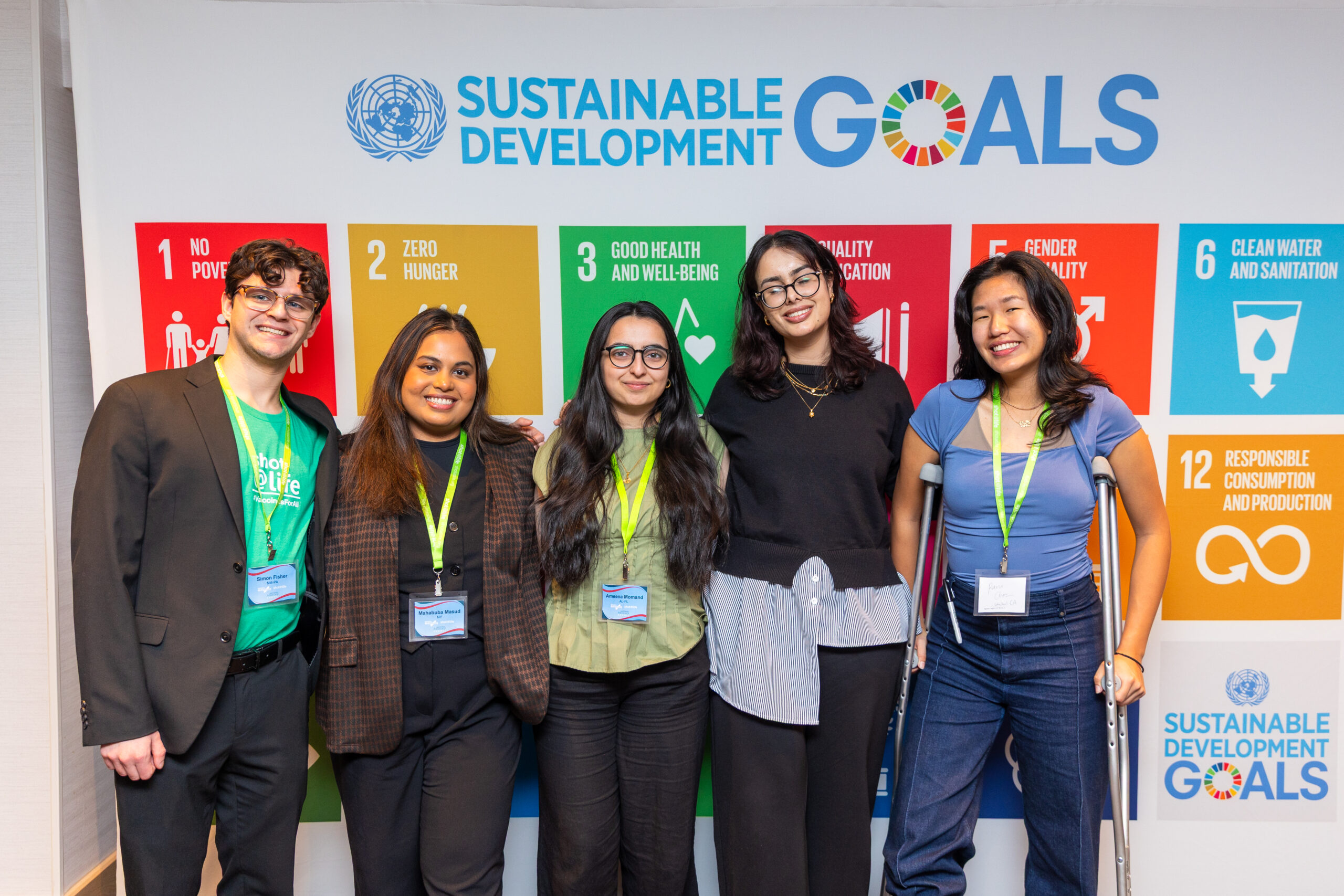
College Ambassadors Mahabuba Masud and Ameena Momand reflect on their advocacy experience—and share why it's now more important than ever.
The Current Landscape for Vaccination
Immunization is the most successful public health intervention in history. Over the last 50 years, global immunization efforts have saved 154 million lives, which is equal to 6 lives every minute of every day. However, we have recently seen troubling data for vaccine coverage as low-income countries are lagging behind in immunization goals.
During 2024, 14.3 million infants did not receive a single dose of any vaccine. These children are concentrated in low-income countries: Afghanistan, the Democratic Republic of the Congo, Ethiopia, India, Indonesia, Nigeria, Pakistan, the Philippines, Sudan, and Yemen. Furthermore, measles is a highly transmissible disease, yet 20.6 million children missed their routine first dose of measles, a stark increase from the 2019 level of 19.3 million. High-income countries are not exempt from the increase either; countries including France, Italy, Japan, the UK, and the US are also experiencing a significant decline in coverage against whooping cough, measles, tuberculosis, and more.
Both lingering interruptions from the COVID-19 pandemic and recent global health funding cuts have disrupted many lifesaving routine immunizations. Moreover, vaccine hesitancy is an increasing challenge within the United States, contributing to declining immunization coverage and the resurgence of vaccine-preventable diseases. Although measles was declared eliminated in the U.S. in 2000, recent outbreaks have been linked to communities with low vaccination coverage. Factors such as misinformation on social media, declining trust in public health institutions, and the politicization of vaccines have contributed to growing skepticism toward routine immunizations. As vaccination rates fall below the approximately 95% coverage needed to maintain herd immunity for diseases like measles, the risk of future outbreaks continues to increase. All of these trends point to an undeniable fact: our advocacy is needed now more than ever.
An Investment in Vaccines is Progress Towards Community Health
Pathogens know no border, political party, or region. An outbreak can impact us all. It is estimated that infectious disease outbreaks cost an estimated $60 billion per year globally to address. But we can stop these costs at their source; investments in vaccinations and routine immunization would elevate prevention. Over the past 50 years, global vaccination efforts have saved an estimated 154 million lives, the majority of them children, demonstrating the immense public health impact of widespread immunization programs.
Our Reflections from Capitol Hill
As Shot@Life and United to Beat Malaria College Ambassadors, we received the amazing opportunity to speak to United States representatives and Senator staff about the importance of continuing global health aid for vaccinations, especially in the upcoming Fiscal Year 2027 Budget decision.
My name is Mahabuba Masud. As a Bangladeshi American immigrant from NYC, I spoke with my New York State representative and Senators and shared how their single decision in global health funding can have ramifications across entire vulnerable communities, especially my community in Bangladesh. In 2014, Bangladesh recorded 57,480 cases of malaria and 45 related deaths. I was among the fortunate few to receive the life-saving malaria vaccine in my home country. However, many people were not as fortunate; 45 people died as a result of malaria-related causes. Vulnerable populations, specifically rural residents, women, and children, are at high risk of transmissible diseases due to healthcare barriers and their prolonged exposure to mosquito bites.

During our Hill Day, I came across the staff for Senator Gillibrand, whom I previously interned for back in NYC. While speaking with the staff, I shared the importance of protecting women and children from preventable deaths through immunization efforts— an integral value for the Senator, who is a leading advocate for women and children’s health. Through mutual values and shared understanding to protect the health of our communities, I highlighted the importance of supporting vaccination funding efforts.
My name is Ameena Momand. As an Afghan-American from Alabama, this advocacy experience felt especially meaningful to me. Afghanistan is one of only two countries in the world where wild poliovirus transmission has never been fully eliminated. That reality shows how fragile progress in global health can be when communities face conflict, limited healthcare infrastructure, and barriers to routine immunization. Growing up with that understanding made the conversations on Capitol Hill feel very real to me. Decisions about global health funding in the United States don’t just stay within borders—they can affect children and families across the world, including communities connected to my own heritage.
At the same time, living and studying in Alabama has also shown me that public health challenges exist everywhere, even here in the United States. In the Southeast, many communities still face barriers to healthcare access, lower vaccination coverage, and broader health disparities. As a student at the University of Alabama at Birmingham (UAB), I’ve seen firsthand how important strong medical and research institutions are in addressing these challenges. UAB is one of the most renowned medical centers in the South, and its hospitals, researchers, and public health experts play a major role in improving health outcomes across Alabama and the surrounding region.

Being in those meetings on Capitol Hill made me reflect on how public health progress is rarely the result of one single decision. Instead, it’s built slowly over time through research, policy, and community engagement. The history of infectious disease interventions shows this clearly: whether through the development of the polio vaccine in the twentieth century or the expansion of childhood immunization programs worldwide. Each step forward requires collaboration across borders, institutions, and communities.
In many ways, global immunization efforts remind me of sewing threads in a fabric. Each program, research institution, and policy decision may seem small on its own, but together they create a network of protection that stretches across countries and generations. When one thread weakens (whether through funding cuts or declining vaccine confidence), the entire system becomes more vulnerable. Advocacy helps reinforce those threads by ensuring that the resources and attention needed for prevention remain strong.
That perspective stayed with me throughout the advocacy day. Sitting in those conversations, I realized that the work being done in places like Alabama, at institutions like UAB, is connected to the broader global effort to prevent disease. Public health doesn’t operate in isolation. The same commitment to research, prevention, and community health that improves lives locally can also support efforts to protect vulnerable populations around the world. In that way, global health advocacy becomes less about distant issues and more about recognizing how closely connected our health truly is.

The Importance of Sharing Your Story
Many staff members took the time to listen carefully, ask thoughtful questions, and consider how global health funding decisions impact communities both in the United States and around the world. Moments like these reinforced how important it is for students and advocates to share their stories, because those conversations help ensure that lifesaving vaccination programs remain a priority. As future public health professionals, we both left Capitol Hill feeling encouraged and motivated. Global immunization efforts have already saved millions of lives, but continued progress depends on sustained commitment, collaboration, and investment. We remain hopeful that the voices of advocates, researchers, and community members will help shape policies that strengthen vaccination programs and ensure that lifesaving immunizations remain accessible to vulnerable populations around the world.